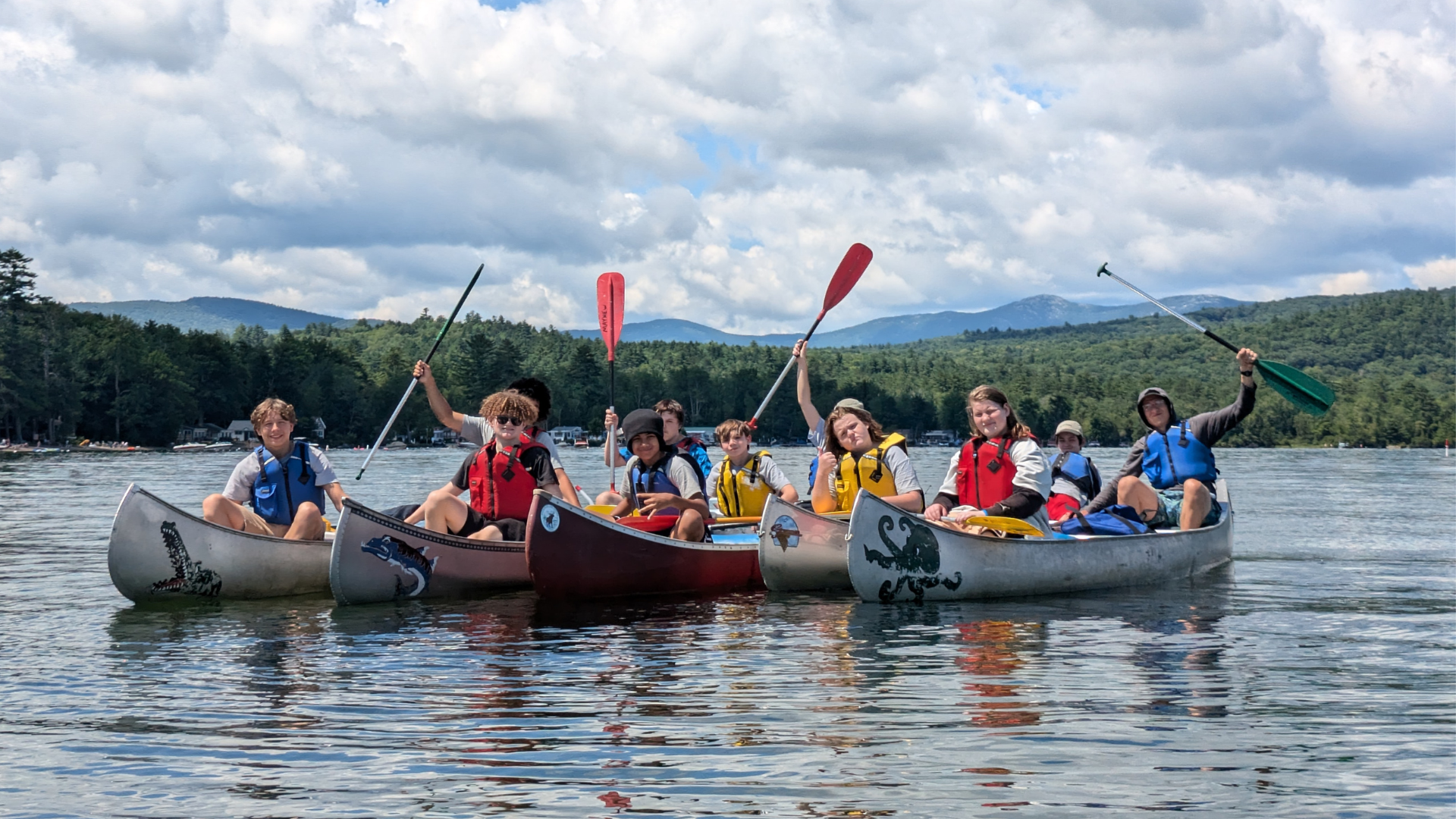
On a wooded island in Newfound Lake, the Mayhew Program has been helping New Hampshire boys discover who they can be for more than half a century. Each year, about 225 boys ages 10–18 take part in its unique blend of summer camp, mentoring, and year-round support. The program is entirely tuition-free for families, relying on donations, volunteers, and a loyal network to sustain what has become one of the most distinctive youth initiatives in the country.
An Overview of Mayhew
Founded: Roots date back to 1893, became Mayhew Program in 1969
Who they serve: Boys ages 10–18 from low-income, foster, or at-risk backgrounds
Scale: About 225 boys per year, more than 2,400 alumni statewide
Where: Mayhew Island, Newfound Lake, with outreach across NH
Key values: Respect, responsibility, community, teamwork
A Different Kind of Camp
Mayhew isn’t a typical summer camp. Boys usually enter at age 10 or 11 and commit for up to eight years. Their journey begins with “The Island Challenge,” a three to four week residential program that pushes them to try new things in a structured, supportive environment.
Mayhew helps teach boys the importance of teamwork.
From the first day, boys are placed in small cabin groups where they live, eat, and take on challenges together. Many arrive unable to swim, but by the end every participant learns. They hike mountain trails, play team sports, complete ropes courses, and tackle a daily “work hour,” where chores are structured around a camp economy that rewards effort and responsibility.
Early in the session, campers are introduced to Mayhew’s classic wooden dories. At first campers start with no oars in hand, and learn how to balance and listen. The task can feel overwhelming, especially for boys who have never set foot in a rowboat before.
By the end of camp, though, the transformation is clear. On the final day, each group lines up for a boat race across the water. What started as scattered strokes becomes a coordinated effort, with every boy rowing in rhythm, calling out encouragement, and working as one. The race isn’t just about speed; it’s a celebration of how far they’ve come together.
For many, it is their first chance to spend time in nature away from outside pressures. “At the time you don’t realize the impact,” said Executive Director Peter Saliba. “But years later, alumni come back and tell us it transformed their lives.”
Building Values, Year by Year
In their third year, boys graduate into “Link-Up Expeditions” that include backpacking, biking, and canoeing in New Hampshire’s mountains and lakes. These shorter, intense trips are designed to test teamwork and perseverance.
By age 14, participants can apply to work for Mayhew in paid positions, often in the island’s kitchen or maintenance crews. These jobs not only teach practical skills like punctuality and communication, but also come with matched scholarship dollars to help pay for college or technical training.
In the final phase, staff focus on guiding boys through high school graduation, career exploration, and community service. By then, many of the older teens are mentoring the younger ones, carrying forward the values they learned years earlier.
A Year Round Effort
What sets Mayhew apart is that the connection doesn’t end when camp does. Staff members check in with each boy monthly during the school year, visiting homes, meeting teachers, and providing extra support. This follow-through helps boys apply camp lessons at school and in their communities, while also ensuring that basic needs like food, clothing, and safe housing are being met.
Saliba calls this the program’s “secret sauce.” Research and experience show that many teens quickly forget good lessons if they aren’t reinforced. Monthly check-ins keep values like respect, responsibility, and perseverance alive well beyond the summer.
Who Mayhew Serves
Since its founding in 1969, Mayhew has worked with more than 2,400 boys. Candidates are generally referred by teachers, counselors, or youth workers, and most come from families facing poverty, foster care, housing instability, or parental substance misuse.
The program serves nearly every part of the state, from Portsmouth to Keene to Berlin. It currently does not operate in Nashua, but has a strong presence in the Concord area, where many boys have joined over the decades. Alumni often return to speak to civic groups, schools, and libraries about how the experience shaped them into who they are today.
Mayhew helps gives boys the confidence they need to succeed.
“The hopes and dreams of boys are the same everywhere,” said Saliba, who took over as executive director last year after three decades working with teens. “Helping them see they can succeed, that’s the magic.”
A History That Runs Deep
Mayhew’s roots go back to 1893, when Groton School in Massachusetts opened a charity camp for underprivileged boys on Squam Lake. In 1920, the program relocated to Mayhew Island on Newfound Lake, thanks to the Webster family. After Groton shifted its focus in the 1960s, local residents revived the program in 1969 under the Mayhew name. It was formally incorporated in 1975 and has operated on the island ever since.
That long legacy makes it one of the oldest charitable summer programs for boys in the country.
Powered by Community
Volunteers also play a critical role. Each spring and fall, community members help prepare the island for the season or close it down. Donors provide clothing, meals, and other resources to ensure boys have what they need throughout the year. Alumni regularly return to mentor, work, or simply check in, proof of the program’s lasting impact.
“The generosity of our neighbors is what keeps this going,” Saliba said. “Our donors are very loyal and enthusiastic.”
The boys are able to enter the program tuition free, with families not having to pay for anything. The effort of donors—including former campers and longtime supporters—is what keeps the program running.
A Lifetime of Impact
 For participants, Mayhew often represents more than just a summer away. It can be the first time someone believes in them, the first time they see themselves succeed, or the first time they feel part of a positive community.
One alumni recently stopped by the island to say thank you, years after his time as a camper. Others return as staff, volunteering their summers to guide the next generation. Parents, too, describe the effect in simple but powerful terms: “It transformed his life.”
How to Connect
There are numerous ways to get involved with the Mayhew Program, including:
Referrals: Educators and youth professionals can refer boys ages 10–11; earlier submissions are prioritized, with the deadline each May.
Tours and volunteers: The island hosts guided summer tours and multiple volunteer days.
Community speaking: Mayhew staff regularly present at libraries, schools, and civic groups.
Scholarships: Young men who stay on as staff through age 26 can access matched scholarships for college or training.
A Powerful Impact in NH
The organization shares updates and stories on their Facebook and Instagram. Donations fund everything from swim lessons to mentoring visits, keeping the program tuition-free. What makes the Mayhew Program remarkable is not only its scope, but the tangible impact it has on New Hampshire families.
To learn more, visit mayhew.org. If you would like to donate, visit https://www.mayhew.org/giveonline.