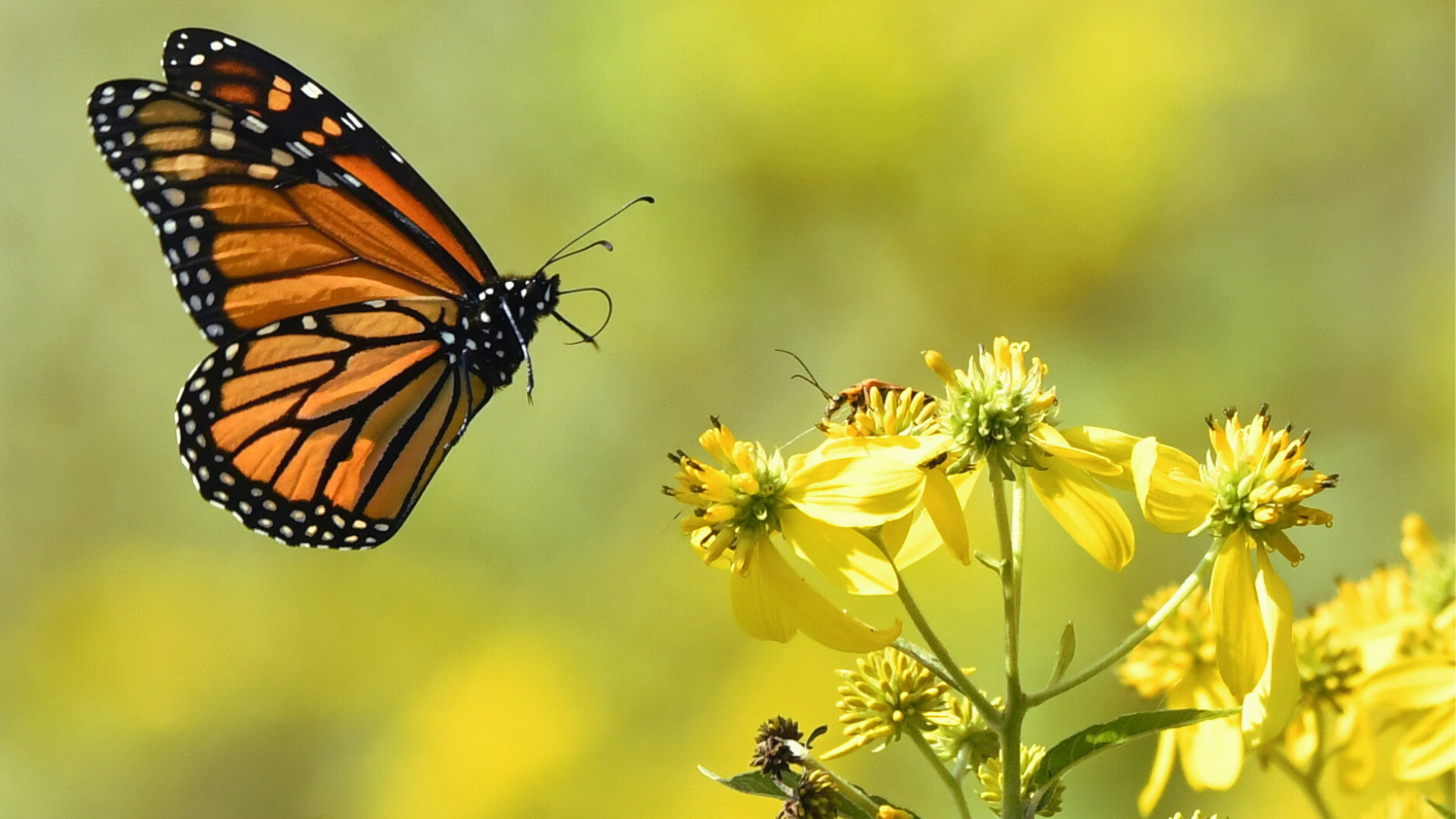
Monarch butterflies, one of North America’s most iconic and beloved pollinators, are in trouble. You can play a part in their recovery right here in New Hampshire.
Over the past 20 years, monarch populations in the U.S. have plummeted by an estimated 84%, placing the species at risk and raising alarms across conservation communities. These striking orange-and-black butterflies are known not only for their beauty but for their incredible migration, which spans thousands of miles from southern Canada to the high-elevation forests of central Mexico. However, their journey is becoming increasingly perilous due to a combination of human-driven and environmental threats.
What’s Behind the Monarch Decline?
Monarch butterflies face challenges at nearly every stage of their lifecycle. Key issues include:
Loss of Breeding Habitat
Native milkweed—the only plant monarch caterpillars can eat—has declined significantly due to development and widespread herbicide use.
Degradation of Overwintering Sites
In Mexico and California, forests that host overwintering monarchs are shrinking due to logging and development.
Unpredictable Weather Patterns
Harsh fall hurricanes, droughts, and early frosts, disrupt monarch migration and survival.
Pesticide Use
Even when not targeted, monarchs are affected by widespread pesticide application, which reduces their food sources and can directly harm both larvae and adults.
Disease and Parasites
A parasitic pathogen, Ophryocystis elektroscirrha (OE), has become more common, especially when tropical milkweed is grown outside its native range and allowed to persist year-round.
Despite these challenges, monarchs are still resilient, and with coordinated action there’s a real chance to help reverse their decline.
A Local Solution: Join the Capital Region Butterfly Count
One way to help is by joining the NH Butterfly Monitoring Network’s Capital Region Butterfly Count, taking place on Saturday, July 26, 2025, from 9:00 AM to 4:00 PM. This event is part of a continent-wide effort coordinated through the North American Butterfly Association, involving more than 450 count circles across North America. This includes seven sites in New Hampshire alone.
The count, headquartered at the McLane Center in Concord, brings together community scientists, naturalists, and curious newcomers for a day of exploration and data collection. Participants will spread out across a 15-mile diameter circle, documenting butterfly species and numbers in a variety of habitats around the Concord area.
Whether you’re an expert at identifying butterflies or simply want to help, there’s a place for you. Volunteers are needed to:
Navigate between field locations
Photograph butterflies for later verification
Record observation data
Assist with species identification
No experience is necessary! All that is needed is an interest in butterflies and a willingness to contribute. You’re welcome to participate for the full day or part of it. In case of inclement weather, the event will be held the following day, Sunday, July 27.
Pre-registration is encouraged, as it helps organizers build balanced teams and plan observation routes. To sign up or learn more, visit nhaudubon.org.
How to Help Monarchs in Your Own Backyard
The butterfly count is just one way to make a difference. Supporting monarchs doesn’t require scientific training, just a little space and a commitment to plant thoughtfully.
Plant Native Milkweed and Nectar Sources
The most effective way to support monarchs is by planting native milkweed species—the only food source for monarch caterpillars. In New Hampshire, suitable varieties include common milkweed, swamp milkweed, and butterfly weed.
Avoid tropical milkweed, which is not native and can contribute to the spread of OE disease when grown year-round.
Add nectar-rich native flowers as well, such as coneflowers, bee balm, goldenrod, black-eyed Susan, and asters. These help fuel adult monarchs during their migration.
Support Local Native Plant Communities
Native plants don’t just support butterflies, they provide food and shelter for bees, birds, and other beneficial species. Plus, they require less maintenance and water once established, making them a sustainable landscaping choice.
Whenever possible, choose seeds or plants sourced locally, which are better adapted to New Hampshire’s climate and support local wildlife more effectively.
You don’t need acres to help. Whether it’s a pollinator strip along a driveway, or a rooftop planter, every patch of habitat helps create a stronger ecosystem. These zones are essential for pollinators like monarchs, especially in developed areas.
The Importance of the Monarch
Monarchs are more than beautiful butterflies, they’re indicators of environmental health. Their dramatic migration, dependent on healthy landscapes from Canada to Mexico, reflects the interconnectedness of ecosystems across the continent. Helping monarchs helps countless other species that share their habitats.
By joining events like the Capital Region Butterfly Count and making small changes at home, you can play a tangible role in ensuring future generations experience the wonder of monarch butterflies.
Looking Toward the Future
As Monarch numbers decline, the need for community action becomes more urgent. Whether you plant milkweed in your yard, teach others about pollinator conservation, or spend a few hours helping count butterflies in the field, your actions matter.
By getting involved, you’ll not only support monarch conservation, but you’ll also gain a deeper connection to the natural world and to your local environment. Every effort brings us one step closer to securing a future where monarchs can thrive.